
Which Landover Records Are Open
Landover has no general municipal clerk, recorder, assessor, election board, or city court. It is an unincorporated census-designated place in Prince George's County. That makes the county and Maryland records map essential. The Town of Landover Hills is a separate municipality, and its files do not cover every address that uses Landover in a mailing address.
| Record | Official keeper | Web route | Public access boundary |
|---|---|---|---|
| Deeds and liens | Circuit Court Clerk | MDLandRec | Public index and images, with protected data limits |
| State court cases | Maryland Judiciary and filing clerk | Case Search | Public summaries; sealed, shielded, juvenile, and other confidential material excluded |
| Parcel assessment | Maryland SDAT | Real Property Data Search | Free informational display, not a legal report |
| Estates | Register of Wills | Estate Search | Index is public; restricted items remain closed |
| Vital certificates | Maryland Vital Records, clerk, or Archives | Applications and archive indexes | Eligibility and age rules apply |
| Custody and registry data | County corrections or Maryland DPSCS | Separate official locators | Limited to each system's statutory scope |
The Maryland Public Information Act governs state and local administrative records. Court-file access instead follows Maryland Judiciary rules. A portal result may be public even when the document behind it is available only from the filing clerk. Adoption cases, juvenile matters, protected personal identifiers, and records sealed or expunged by law do not become open merely because someone submits a request.
Landover Public Records Custodians
The right office depends on who made the record. Prince George's land deeds, marriage licenses, and Circuit Court files belong to divisions of the Clerk of the Circuit Court. Estates take a different route through the Register of Wills and Orphans' Court. Maryland SDAT keeps the assessment database, while the Division of Vital Records issues state certificates. Public records for a police incident remain with the Prince George's County Police Department Records Section, not the court portal.
Prince George's Circuit Court Clerk
Land records, marriage licenses, and Circuit Court files
Register of Wills
Estate files, wills, inventories, accounts, and interested persons
Maryland Vital Records
Certified birth, death, marriage, and divorce verification products
State applications and identity review
Maryland State Archives
Transferred historic land, probate, court, and vital series
Series guides and archival requests
Office counters remain important. A case number takes a reader from a web summary to the filing courthouse. A deed reference takes a reader from an assessment entry to the recorded instrument. For an old estate, the Archives series guide identifies the date span and repository before a copy request is made.
Landover Land Records Access
Maryland records deeds through the judicial branch. The Circuit Court clerk records Prince George's instruments, while the Judiciary and State Archives operate Maryland Land Records. A free account with email multi-factor authentication is required. Searchable electronic county data begins in 1950, but older routes remain in historical and retired indexes. The Archives identifies a land-record index series for 1851 through 1924 and separate abstracts for 1787 through 1802.
| Search control | Input type | How to use it |
|---|---|---|
| County | Selection | Choose Prince George's County |
| Index or series | Selection | Match the county and record era |
| Party name | Text | Try spelling, initials, and former-name variants |
| Grantor or grantee | Mode | Check both sides of a title chain |
| Date range | Range | Allow for a delay between signing and recording |
| Liber and folio | Paired reference | Open the cited book and page directly |
| Instrument number | Text | Use a known modern record identifier |
A grantor transfers or encumbers an interest; a grantee receives one. Liber and folio mean the record book and page. Search both roles because a trustee or business may appear where a person's name does not. New index data can appear before its scanned image, and verified images may follow one or two business days later.
Landover Property Search Myth
The SDAT Real Property Data Search cannot start with an owner's name. Official instructions also rule out searches by town, neighborhood, subdivision, or ZIP code. It accepts a street address, street name, property account identifier, or map reference. Prince George's County is jurisdiction code 17. A result may show an owner, mailing address, premise address, legal description, map-grid-parcel data, deed reference, transfer facts, assessments, and structure details.
Insider tip. When only a name is known, first use a name-indexed court, deed, estate, or business record to obtain an address. Then use SDAT to test the parcel link.
The premise, also called situs, is the property's physical address. The owner's mailing address is where assessment mail goes and may belong to a trustee, company, post-office box, or outdated contact. SDAT labels its display informational. Title proof comes from the deed and related instruments, not from the assessment screen alone.
Landover Court Records Online
Maryland Judiciary Case Search covers state cases from courts serving Landover. The official FAQ reports Prince George's computerized civil coverage from July 1, 1986 and criminal coverage from 1982, though those dates do not promise that every older paper matter appears. Exact-name search is the default. A partial surname uses at least its first character followed by a percent sign, and the wildcard cannot begin or sit inside a word.
The portal can return a case number, court, case type, filing date, status, party roles, attorneys, events, hearings, and disposition data where public. It is still a finding aid. Anonymous users do not receive every filed document, and confidential, sealed, shielded, and juvenile records are suppressed.
The official Case Search help shows the coverage and field rules behind a Landover public records query.
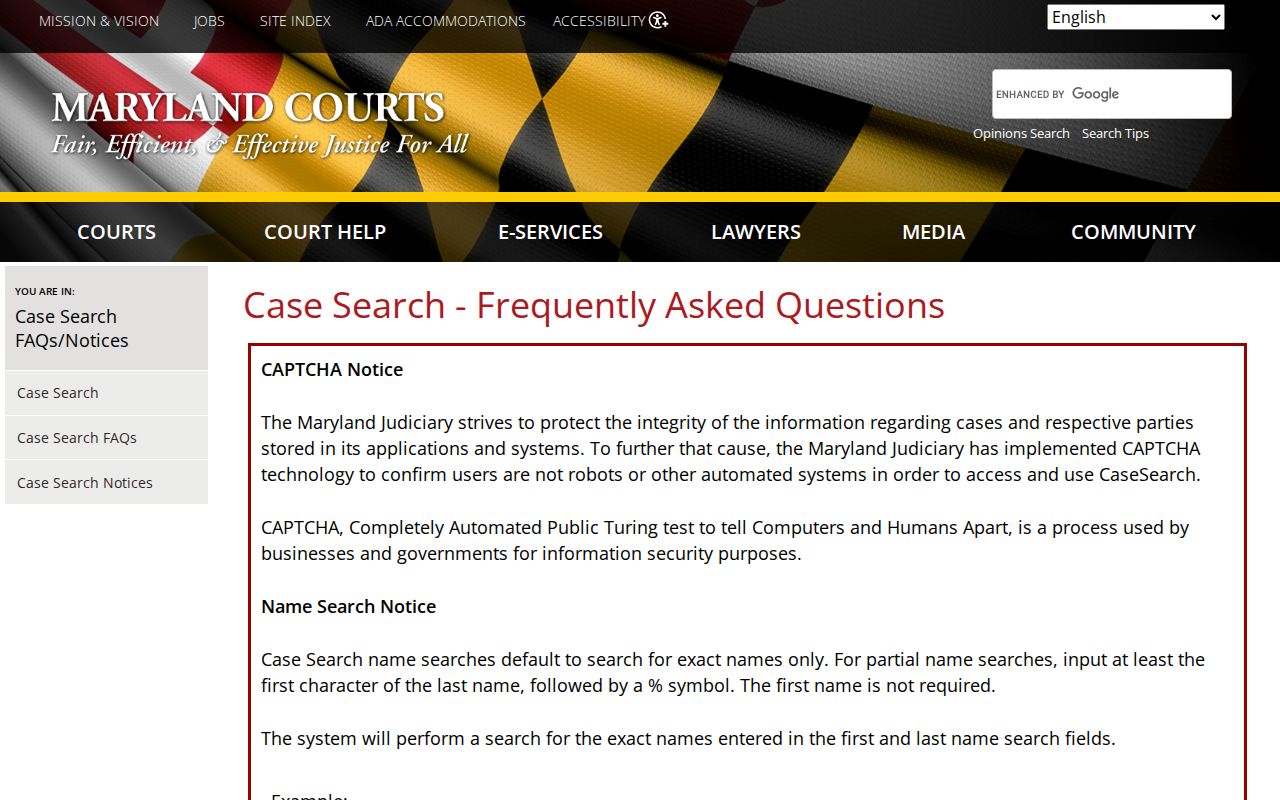
The captured help screen is a useful check when an old search instruction conflicts with the current portal.
Landover Records Portal Changed
Maryland launched its redesigned integrated Judiciary Case Search and Record Portal on March 14, 2026 after a January technical postponement. The change matters because older screenshots may show the former interface. The access line remains stable: the public receives anonymous summary access, while enhanced document access is reserved for authorized parties and attorneys.
Remote absence is not proof that no court record exists. Since a 2024 access change, certain criminal outcomes no longer appear remotely, including nolle prosequi, dismissal, and acquittal or not guilty. A stet stops showing remotely after three years. Those matters may still be open at the courthouse unless another rule seals or expunges them.
Case Search is the index; the clerk-held case file is the complete public source. Record the case number before calling or visiting the courthouse, since it is the cleanest key for copy retrieval.
Landover Vital Records Boundaries
Recent vital certificates are not open name directories. Maryland's Division of Vital Records requires an application, identification, eligibility, and the applicable fee. Birth eligibility can include the subject, a named parent, a court-appointed guardian, a surviving spouse, or an authorized representative with proof. The Circuit Court clerk remains the source for the underlying Prince George's marriage file and divorce decree.
State Government §9-1015 creates a different rule once records reach the Maryland State Archives. Birth records under 100 years old and death records under 10 years old remain restricted there. Births over 100 years old, deaths over 10 years old, marriage licenses, and reports of absolute divorce or annulment are unrestricted. Eligibility for certified copies remains governed by Health-General §4-217.
The Maryland Vital Records service hub links the current applications and ordering channels.
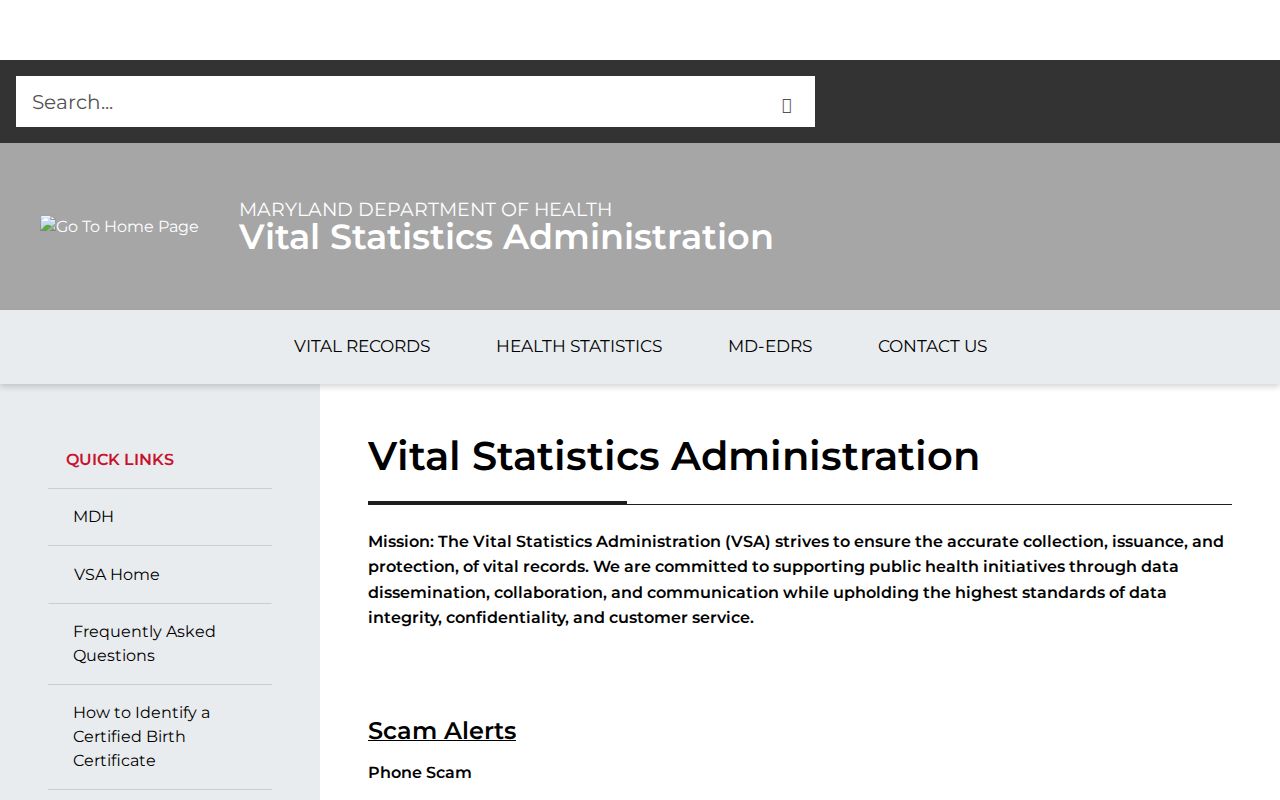
The service screen helps distinguish a certified state product from a historical Archives search.
Landover Estate Records Route
Probate does not belong to the general court-case or land-record workflow. The Prince George's County Register of Wills and Orphans' Court keep estate files. Maryland Estate Search can lead from a decedent's name to an estate number, opening date, county, status, type, and register office. The packet may contain a will, petition, interested-person list, inventories, claims, accounts, and distribution records, subject to restrictions.
Prince George's County was formed in 1695 from Calvert and Charles counties, so early family research may cross county lines. The Archives probate guide points to pre-1777 indexes for counties then in existence, county estate papers from 1778 through 1979, and later offsite material from 1980 through 2015 by request.
The Maryland State Archives probate guide shows how those series and repositories divide.
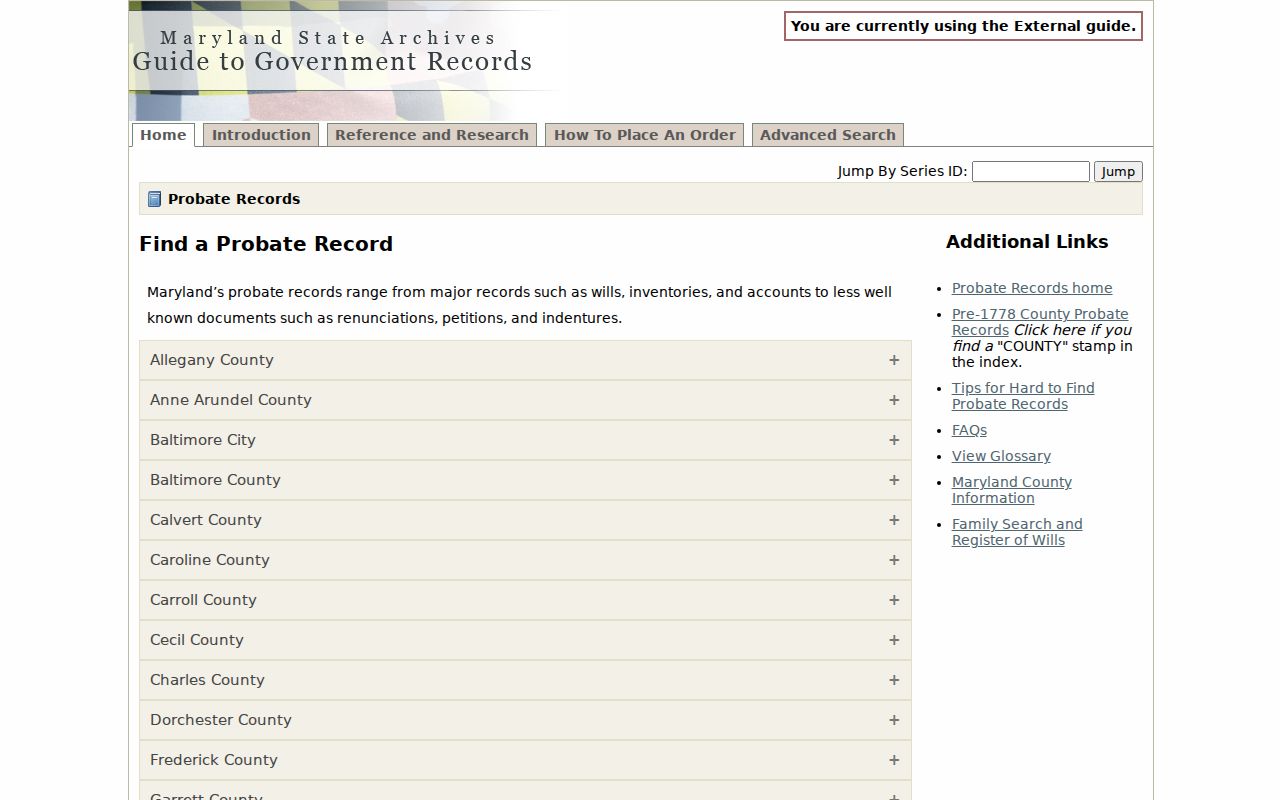
The Archives view makes the historical date span a retrieval tool, not a claim that all estate papers are online.
Landover Records Beyond the Web
When an index ends, the Prince George's Room at the Hyattsville Branch is a strong local fallback. Its noncirculating collection includes historic newspapers on microfilm, county court proceedings, assessment books, Sanborn maps, local periodicals, and photographs. Researchers can ask staff to retrieve microfilm or submit a consultation request. That access channel can add context to a deed, estate, or court reference that a statewide portal reduces to a few fields.
The Prince George's Room collection page describes the local records and staff-assisted access.
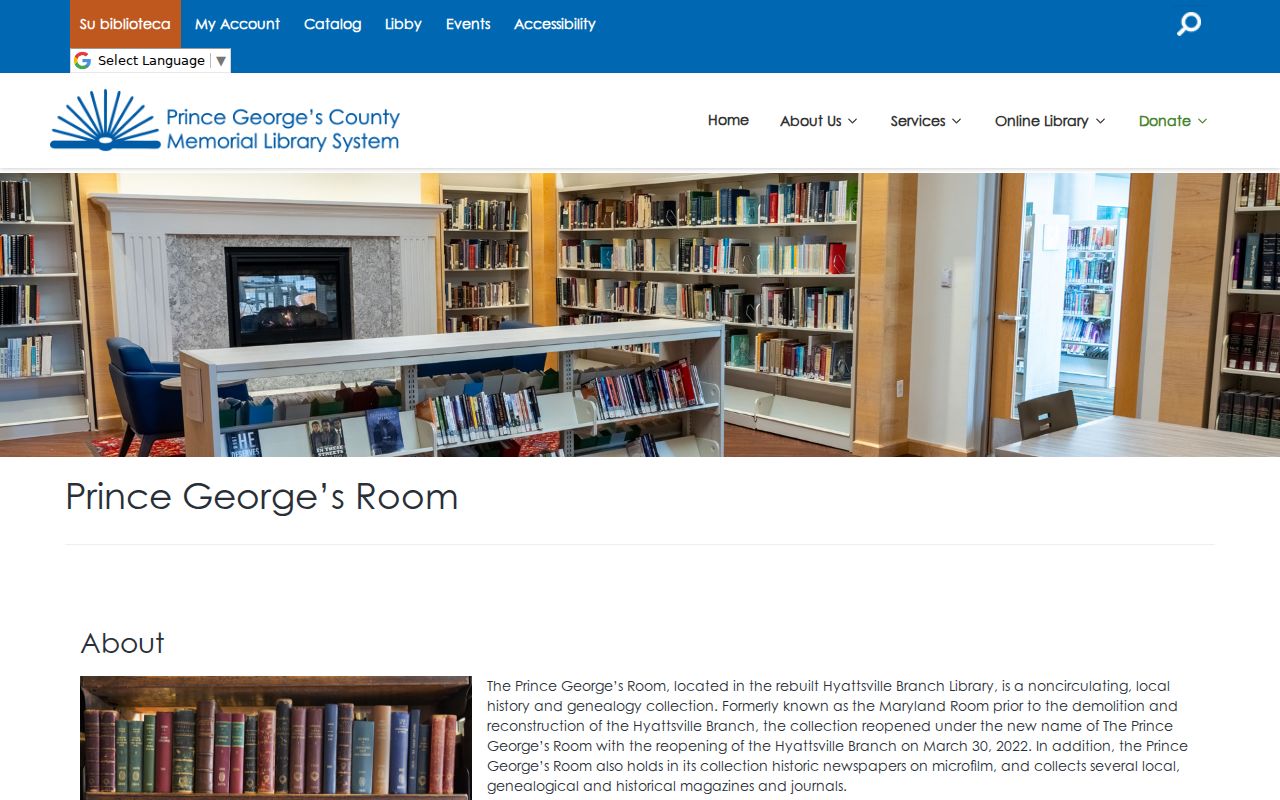
The collection screen points to an offline path for newspapers, assessment books, and court material that may never appear in a name portal.
Landover Custody Record Limits
Correctional and registry systems answer narrow questions. The Maryland incarcerated individual locator is name based and covers people in state custody. A recent local arrestee may instead remain within Prince George's County corrections. The Maryland Sex Offender Registry supports statutory public-safety searches by name or location and can return a profile, status, offense, and mapped information.
Neither source is a complete criminal-history file. An arrest, a charge, a docket result, and a custody event are different facts kept by different offices. Confirm a court outcome with the official docket and, when needed, the clerk's file. Police incident reports require a county request that identifies the report number when possible, along with date, location, and parties. Investigatory, victim, witness, juvenile, medical, and identifying data may be redacted or withheld.
Landover Records Terms Defined
Small differences in records language can change the right access channel. These terms separate a free search result from the official item a reader may need.
- Index
- A finding list that points to a record but may omit the document itself.
- Image
- A scan of the filed instrument or page, which may lag behind new index data.
- Certified copy
- A copy authenticated by the custodian for formal use.
- Custodian
- The office responsible for keeping and responding about a record.
- Exemption
- A law-based reason to withhold all or part of an otherwise requested administrative record.
A certified copy is not always necessary for personal research. Ask the keeper whether a plain copy, electronic scan, or on-site inspection will meet the need. That choice can reduce fees and speed delivery without changing what the source says.
File Landover Public Records Requests
Under the Maryland Public Information Act, any person may apply for an identifiable administrative record. A requester generally need not state a motive unless another use-based statute applies. The request should name the subject, office, date range, people, addresses, and known report, permit, or account numbers. Court cases and deeds should go to their specific clerks rather than to a general county PIA channel.
- Identify the agency or clerk that created and keeps the exact record.
- Check its official index, form, portal, or published email before drafting the request.
- State that the request is under the Maryland PIA, describe the records narrowly, and ask for electronic delivery.
- Request a fee estimate, a cost ceiling, rolling production for a large set, and release of segregable public portions.
- Save the request, acknowledgment, estimate, production, and any written denial for review or appeal.
General Provisions §4-203 calls for prompt production when feasible. If immediate production is not possible, the custodian generally sends notice within 10 working days with the reason and expected time, then grants or denies access within no more than 30 days after receipt. Under §4-206, fees may reflect actual search, preparation, and reproduction, but the first two hours of search and preparation are generally free. A public-interest waiver may be requested.
Lawful use. Use open Landover records for legitimate personal research and civic review. Never use a record, registry, or address to stalk, threaten, harass, or harm anyone.
Challenge Landover Records Denials
A denial should state the legal basis and available remedies. First compare it with the wording of the request. A broad request can often be narrowed by office, date, record type, or known identifier. Ask the custodian to cite the law supporting each redaction and to release portions that can be separated from exempt material.
If delay or denial remains disputed, the Maryland Public Access Ombudsman offers voluntary mediation. Qualifying fee, delay, and denial disputes can go to the PIA Compliance Board, and judicial enforcement is also available. Keep the full paper trail. Dates, cost estimates, correspondence, and the denial text make review far more useful than a verbal account.
Privacy boundaries still apply. Safe at Home protects eligible participants through a substitute-address and mail-forwarding system. Court records may be sealed, shielded, or expunged, while federal driver privacy law limits ordinary name requests for motor-vehicle data. Open-record rights do not override those separate protections.